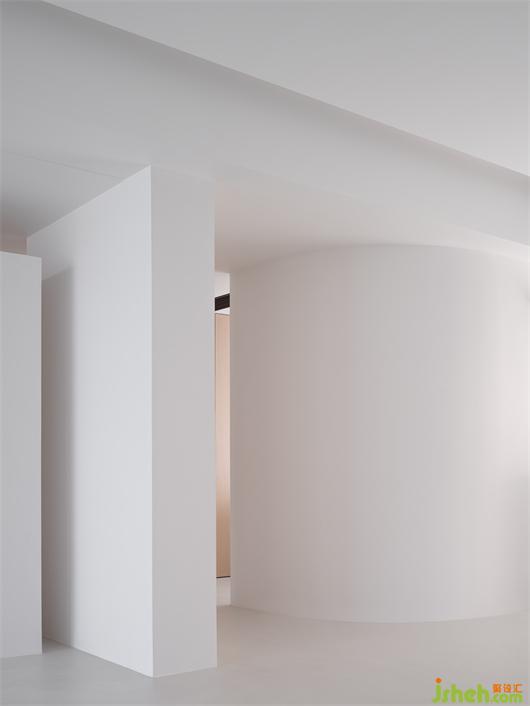
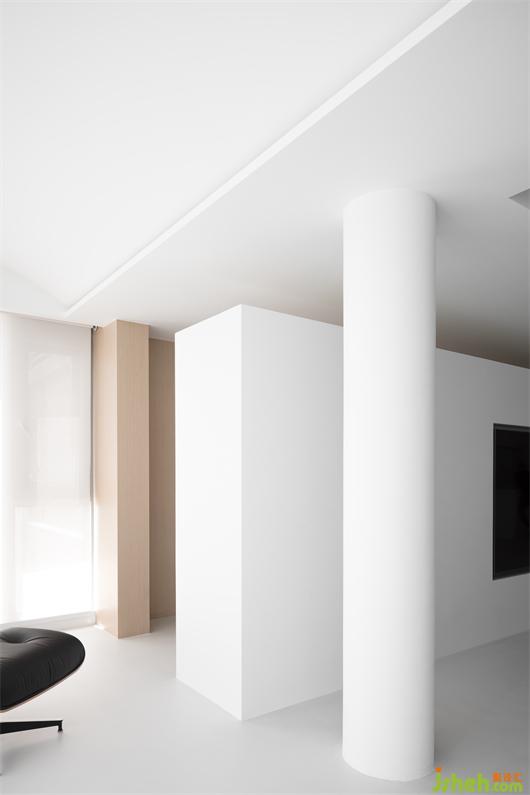
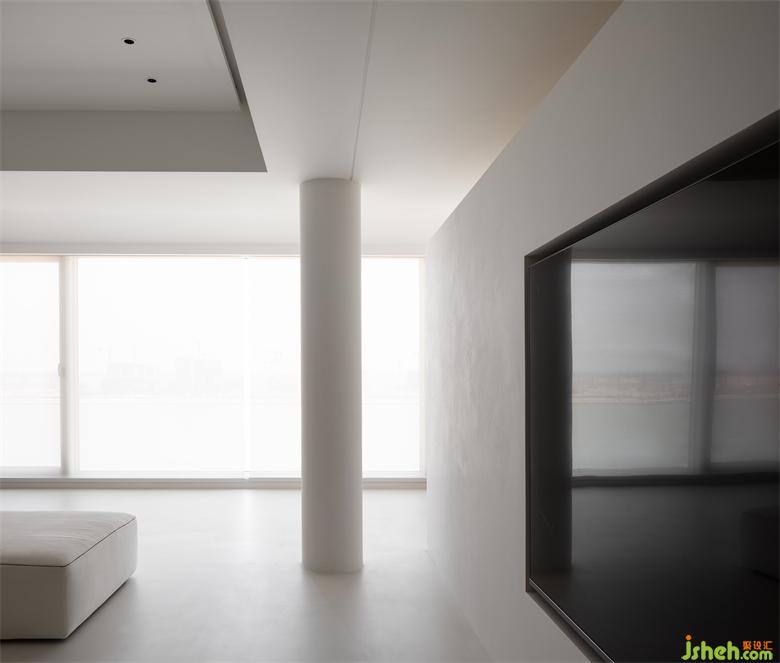
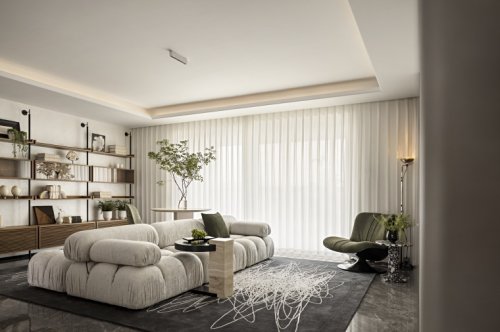
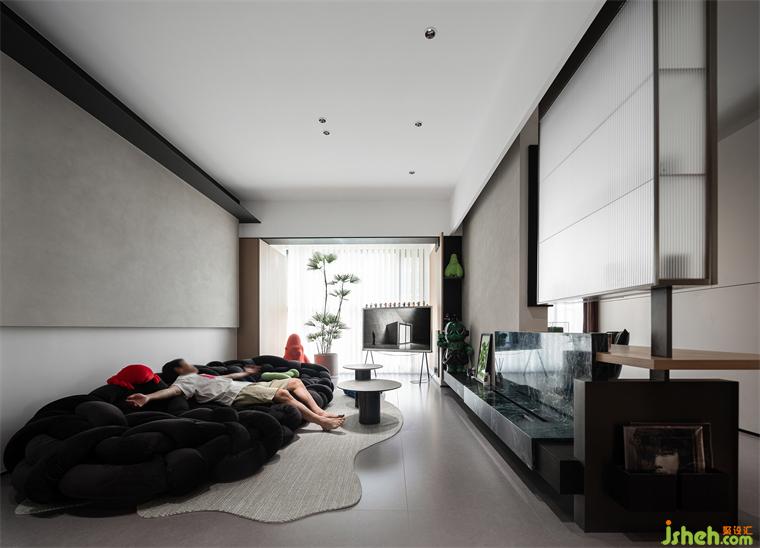
自己的生活空间业主不喜欢邀请客人到家里,所以没有客房,没有公卫的设计也因此而变得合理,我希望我们的功能是有价值的,简约是有价值的。
Considering that client doesn't like to meet with friends at home, so no guestroom and public bathroom were designed in this apartment. The designers hoped that functions in the space are valuable and truly match the occupants' demands. The spatial design is simplistic but rational and valuable.
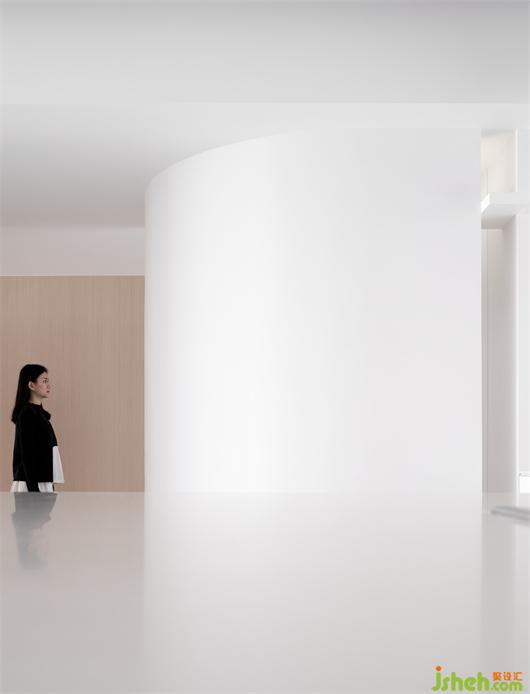
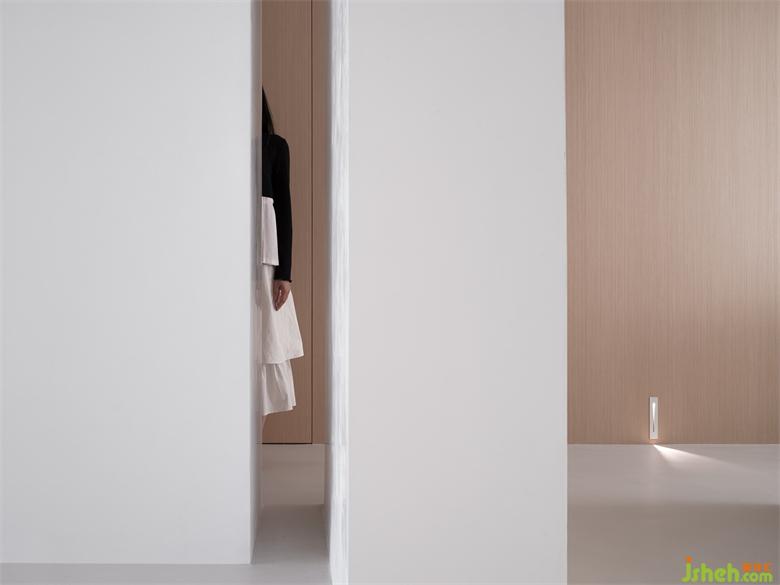
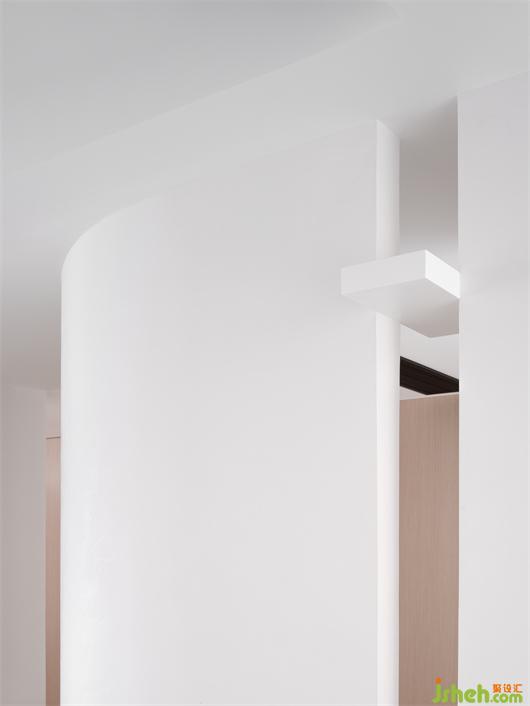
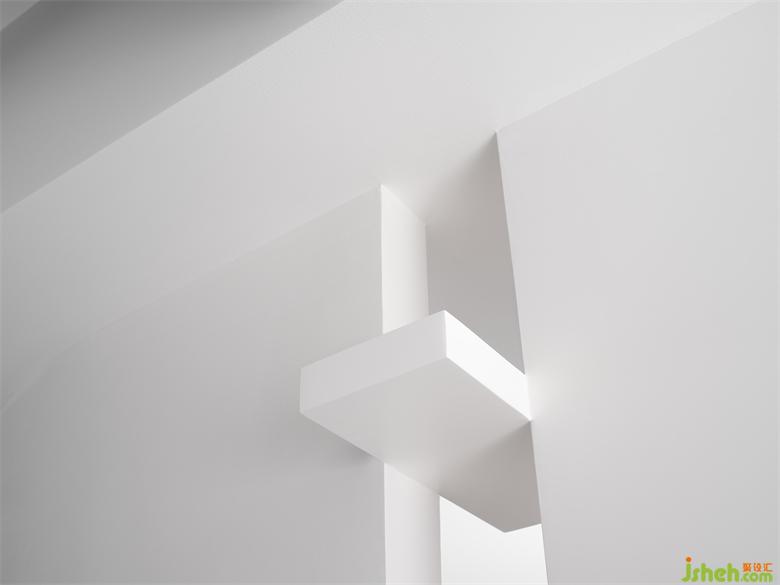
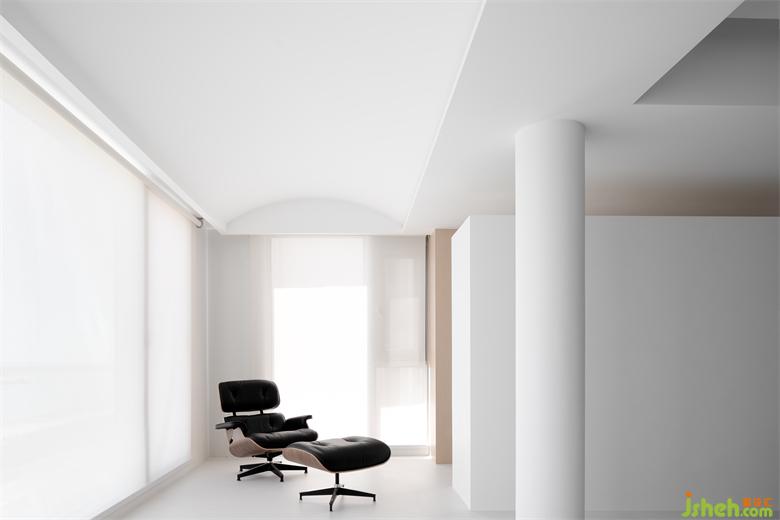
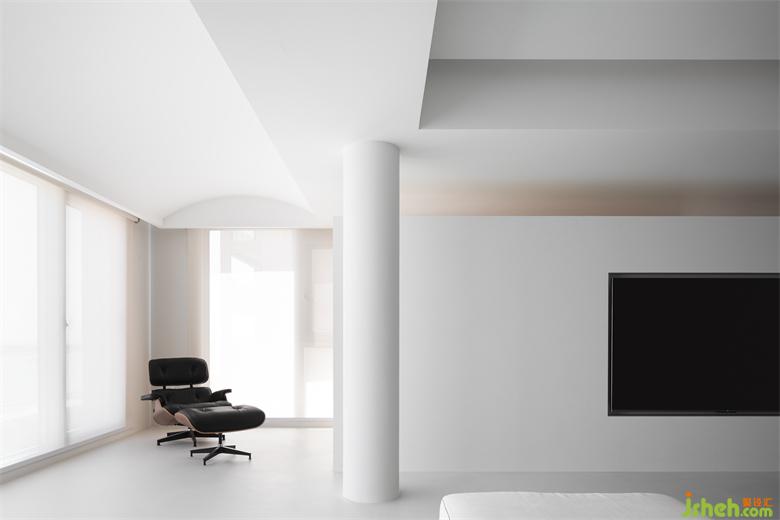
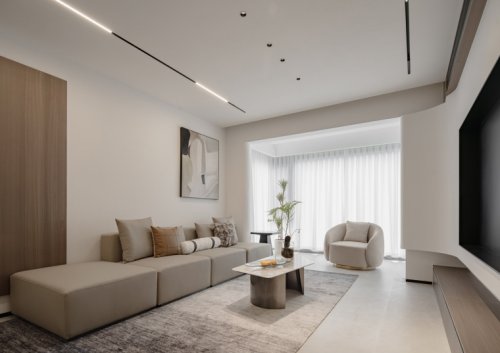
没有客厅的定义,更多的对居者生活状态的表达,慵懒的在沙发上看电视,转身随手拿起一本书阅读,对着大落地玻璃的江景发呆,看手机。家居装修没有餐台的定义,将中岛操作台与用餐功能进行融合,是餐台,是水吧,是咖啡吧,更多的是对生活状态的表达,也让一日三餐的餐台使用率大大的提高。卧室通过中央衣帽区过渡,自然舒适,房间的尺度感在整体的环境中相对紧凑,让人更有安全感与亲切感,舒适与安静。
In this apartment, there is no defined living room. The spatial design is more like the expression of the occupants' living state—lazily watching TV on the sofa, grabbing a book to read, standing beside the large French window to starring at the outdoor waterscape, or looking at the phone... The island integrates the functions of countertop and dining table, and can also be a bar counter. It conveys different living states and has a high frequency of use. The bedrooms are set near the central walk-in closet, featuring a natural, cozy ambience. The relatively compact scale of the rooms gives the dwellers a sense of security, and creates a warm, comfortable and tranquil atmosphere.