设计师:虞国纶
设计公司:格纶设计
风格:现代风格
面积:47平
房屋材料:大理石、水染木皮、喷漆、壁纸、实木木地板、定制铁件、榻榻米
所谓设计,源自创作者对特定人或物件的深刻感受,进而引发情感或美感面的抽象、具象传达。
文:
简言之,空间设计跟其他艺术练习一样,都是一种去芜存菁的自我修炼,但空间设计跟他类艺术最大的不同点,在于它既是设计者个人的独家观点,线条、比例、机能、空间感缺一不可、同时也是一种与某人、某家庭协力的共同创作,设计师借由观察、需求评估、机能整合、归纳使用者喜好与性格特质,进而打造空间作品的独一无二与专属性。
以本案为例,「自由」与「归零」是两大主轴,拓过不设限的思考,跳脱以往制式语汇的套用与束缚,积极还原空间的纯粹质地。
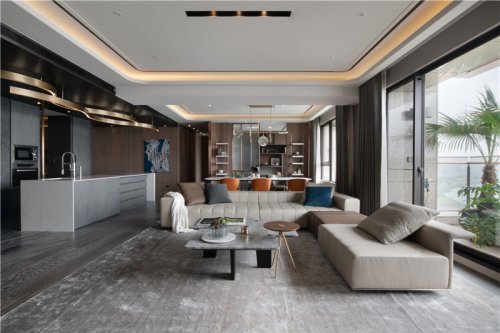
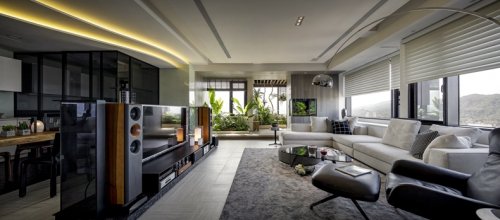
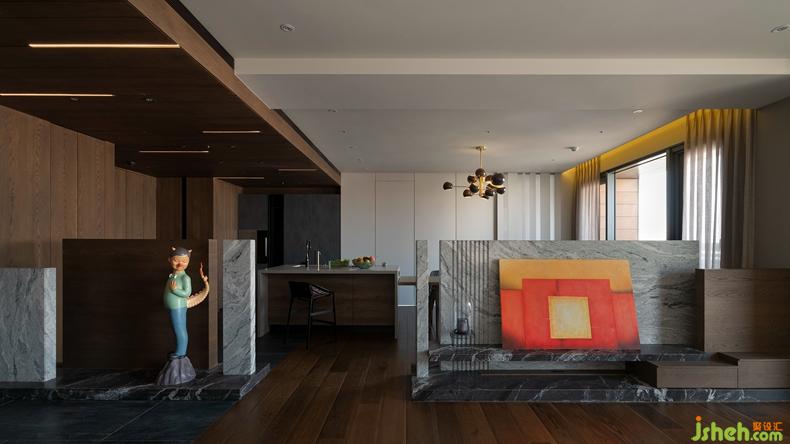
首先进门玄关处贴墙规划一列展示暨收纳高柜,以融于背景的低调素朴手法,满足必要的生活机能,而为了打破以往僵化的格局框架,公领域主要以异材质组接来施作天地分际线,并形塑数座半高的量体阵列,与流畅的十字动线结合以分化场域,逐次打造玄关、客厅、餐厅、轻食吧台区等多个机能单元,随性却不失秩序的聚落佈局,适时挥发着情趣与情感黏着力,让各自于宅中四处活动的家人间,深刻感受一种亲密又自由的氛围,而借由散置阵列灵活架构的点、线、面,保有视觉与光影的流动之美,清爽俐落、看久不腻的既视设定,也让空间获得极限舒展。
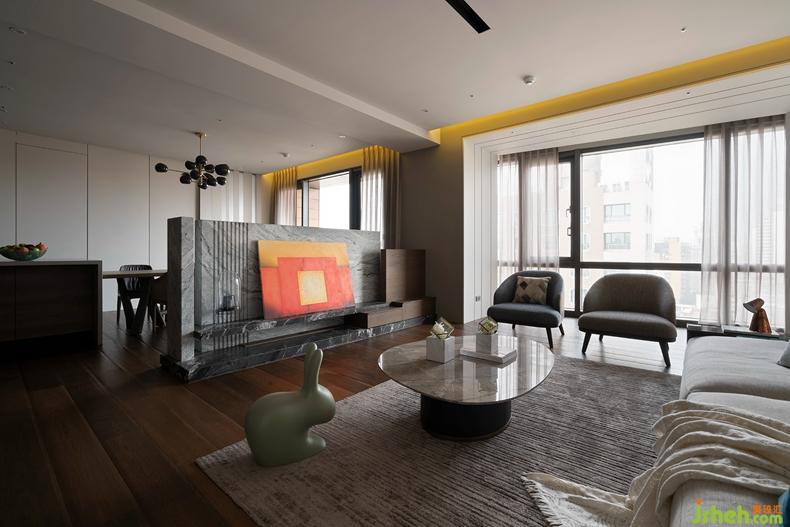
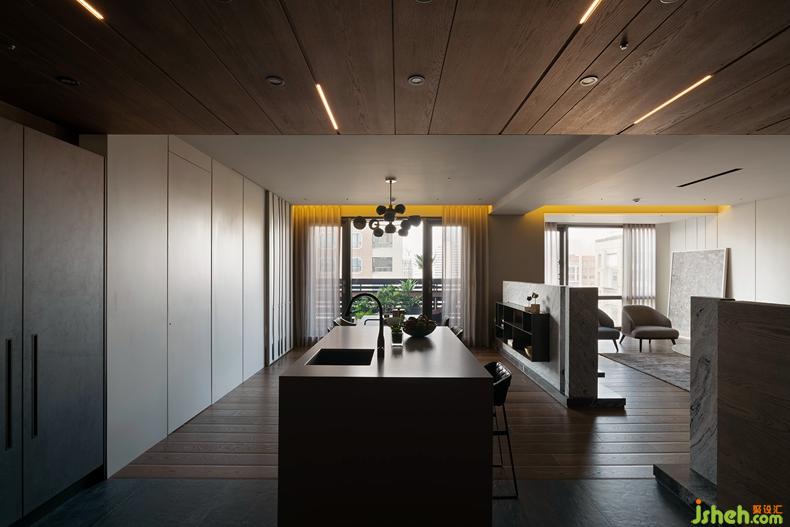
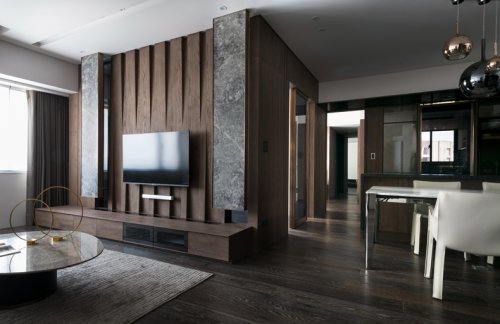
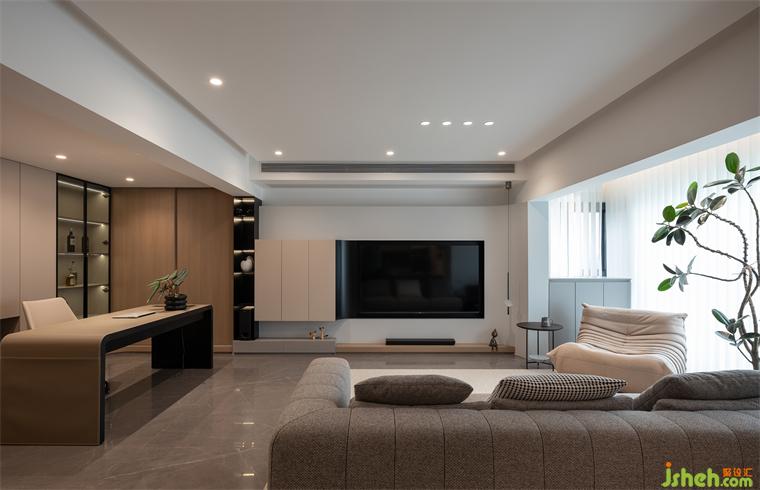
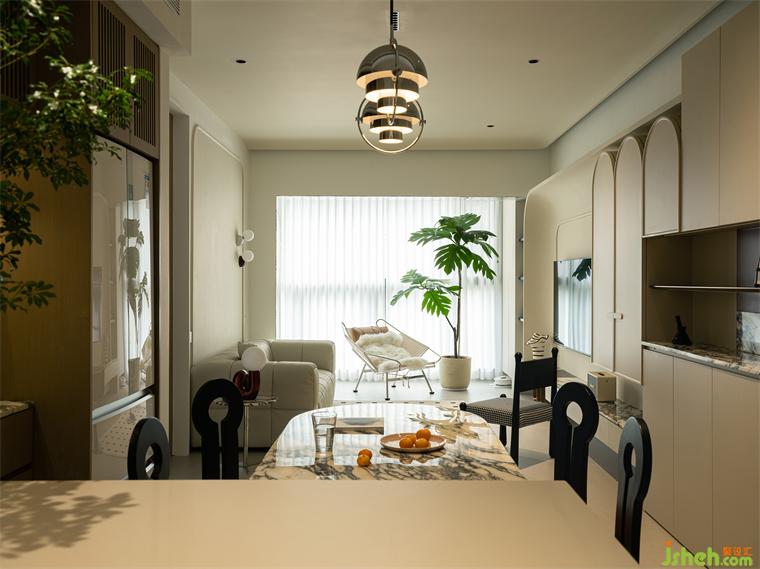
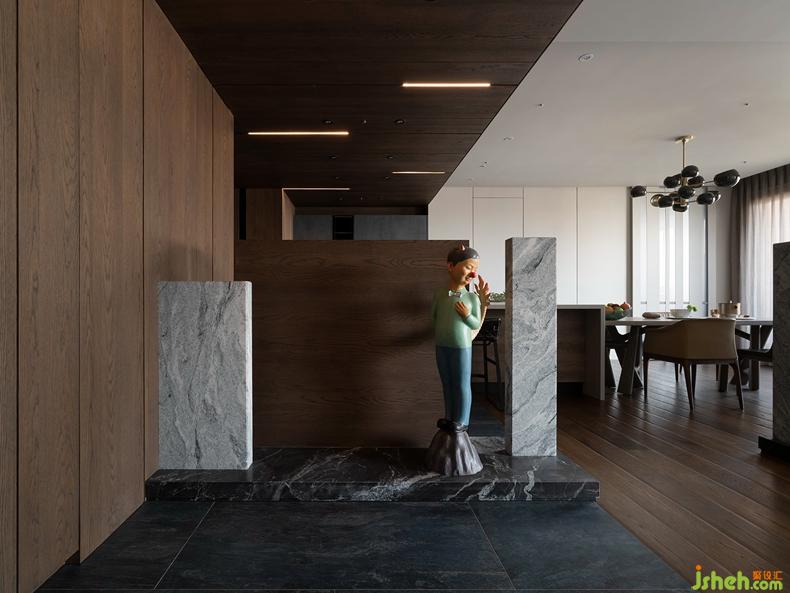
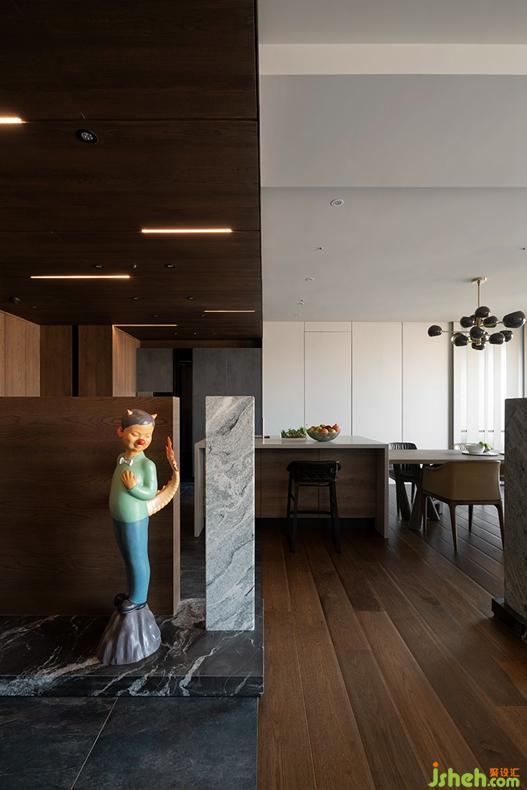
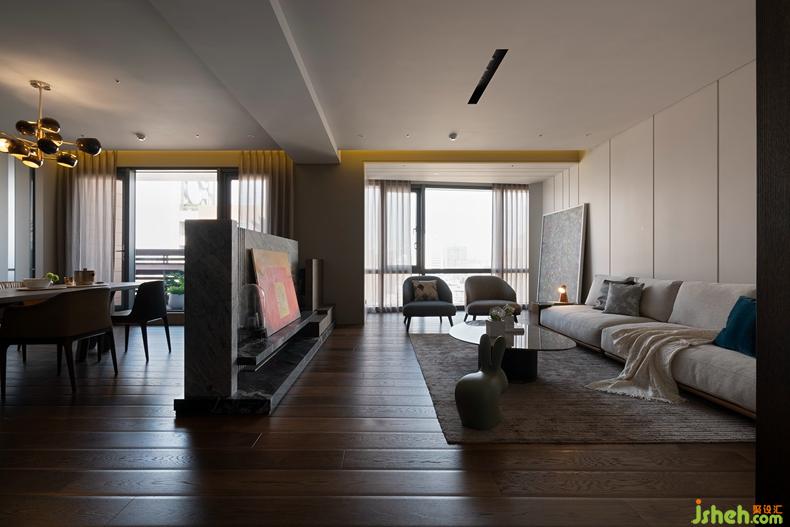
公领域中作为重要介质的三座半墙阵列各拥机能,第一座定位玄关划定里外;兼作进门的迎宾端景,而木石互现的矩阵低台错落层次,精致之外也饶富况味。第二座为客厅电视半墙,面向客厅端延续线条、木石素材的组合变化,而墙后附镶的书格柜机能,无形中也平添餐厅的书香人文。第三座量体为水槽中岛衔接餐桌而成的多功能轴线,除了餐叙饮宴之外;更是理想的交谊、休闲、亲子互动据点。
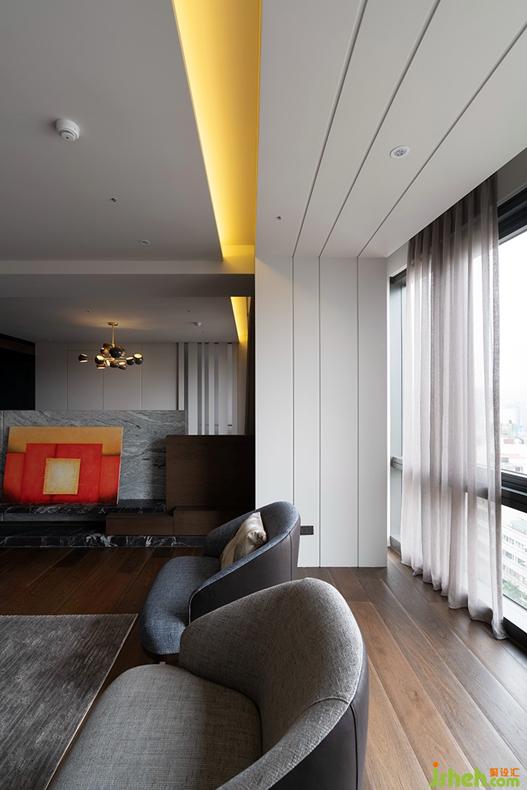
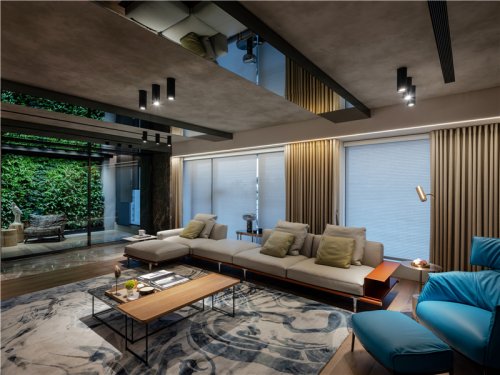
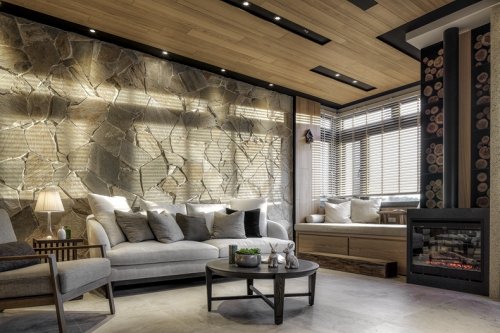
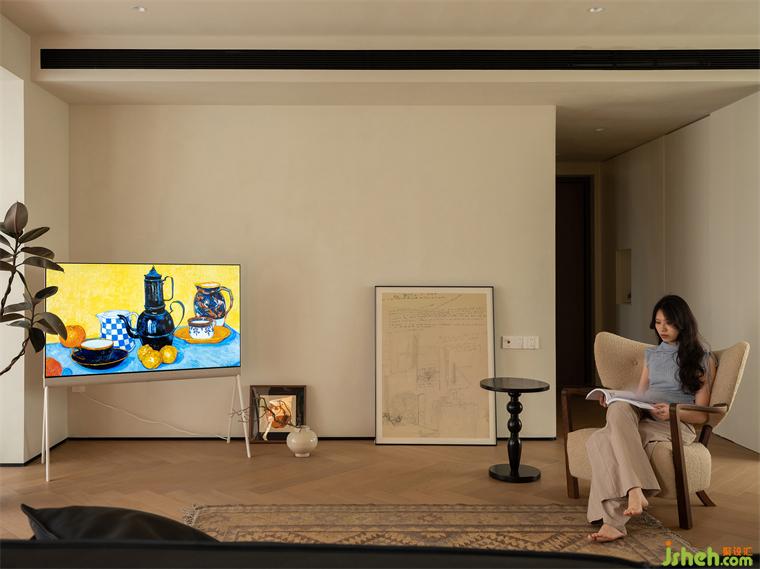
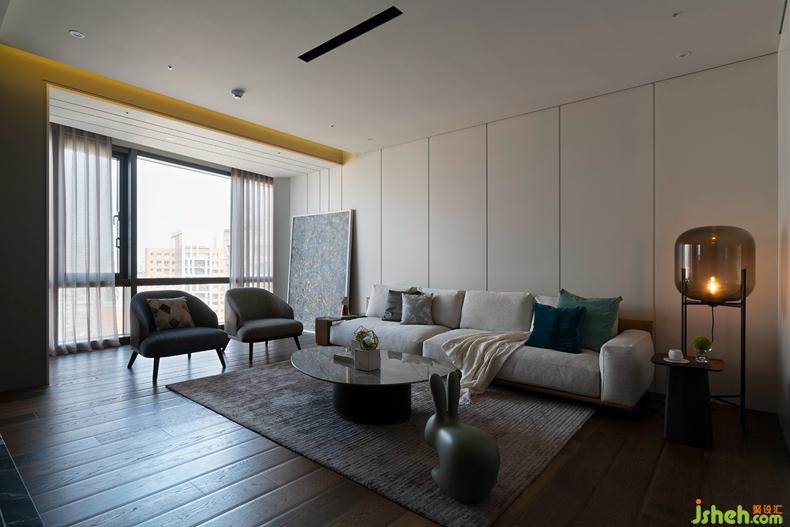
客厅区简敛明净,刻意简化层次与线条堆迭的天花板,本质相对轻盈,而沙发背墙与餐厅背墙两面相呼应的留白与线性分割,适度阐述沉淀之功,并满足放大面宽、强化比例平衡、整合房门动线等潜目的。极度干净的场景,最能回馈人在空间中的移动、停驻、相互交流的温度,偶而将视线移向餐桌外阳台的蓊郁绿影,心灵随之平和净化。
设计不过度;取材、上色、粉妆施力有度,加上设计者深厚的美学涵养,让有限的空间不仅是生活学美的领域,更是累积生活轨迹,赋予居住者真正舒适与身心疗愈的有容栖所。
私领域取精美材质、细致作工、浪漫情调光来呈现细节质感,主卧室过滤华丽、厚重堆砌,床畔巧设梳妆区,另配上隐藏式拉门保有不用时的立面完整性,主浴的设计诸如二近式动线、坐浴区、乾湿分离等,皆是深入观察使用者日常作息后总结而成的巧思。
The so-called design originates from the visceral feelings of the designer toward certain people or things, and subsequently triggers the abstract or tangible communication from the aspect of emotions or aesthetics.
Text:
In brief, similar to all other artistic practices, space design is a type of self-purification by which the dispensable is discarded and the essence is retained. It nevertheless differs most prominently from other art forms by simultaneously being a product of the unique personal viewpoint of the designer and a collaborative effort in conjunction with the clients and their families. It is infused with the designer’s concept of lines, proportions, functions, and sense of space, each being an indispensable factor; at the same time, the uniqueness and exclusivity of a work of space is forged by the designer through observation, evaluation of needs, consolidation of functions, and incorporation of the client’s preferences and character traits.
This case is an example of how, with the two main themes of “freedom” and “emptiness,” the purity of space is actively restored by providing free rein to unorthodox thinking and by breaking off from the restraints imposed by the mechanical application of conventional design discourse.
At the entryway, tall cabinets are installed in line against the wall for storage and display, which quietly merge into the background with their low profile and simplicity while serving necessary functions for daily living. In order to break the customary stodgy layout, fixtures of novel textures are installed in the public space as a dividing line between the ceiling and floor. An array of several half-height structures combined with a streamlined crisscross moving route divide the space into separate fields, including functional units such as the entryway, living room, dining room, and snack bar. The layout design, casual yet not without order, exudes a sense of fun and emotive power, creating a free yet intimate ambience for family members as they move around in the residence. The dots, lines, and planes created with flexibly structured fitments strewn around the space retain a visually stunning fluidity of light and shadow. The neat and refreshing design never bores the eyes and provides a sense of capaciousness by extending the space to its maximum.
Serving important purposes in the public space, three fixtures standing half way up the wall in height boast of different functions. The first unit, installed in the entryway and carving out a sense of division between the interior and the exterior, serves as a greeting sight for guests who enter the door; the low matrix-style cupboard, fashioned with both wood and stone, provides an exquisite sensation and oozes a charming air. The second unit, forming a semi-wall on the back of the TV set, extends the lines and wood-stone texture from the living room creating an impression of variety. The bookshelf space embedded on the back of the wall quietly adds a literary atmosphere to the dining room. The third fixture serves as a multipurpose axis connecting the island counter with a sink and the dining table. In addition to being highly functional at dinner parties and banquets, it is a focal point for socializing, relaxation, and parent–child interaction.
The living room, simple and bright, has purposely done away with the frill-laden ceiling, and exhibits a light wooden texture. The back wall against the sofa and the one in the dining room, aptly simple yet stately, echo each other in blankness and dividing linearity, while serving the purpose of extending the width, accentuating proportional balance, and consolidating the moving route passing each door. The immense simplicity lends easily to moving, staying, and interacting of people in the space; moreover, the patch of verdure on the veranda adjoining the dining table bestows a sense of peace and purification on the mind.
In the private living area, a sense of quality is painstakingly crafted with finely textured decorations and romantic mood lighting. In the master bedroom, overly ornate embellishments have been dispensed with, a dressing table has been neatly fitted into the nook beside the bed, and a tucked-away sliding door retains the façade’s integrity when not in use. The master bathroom is carefully designed keeping in mind the residents’ habits, and boasts of features, such as double moving routes, a bath area, and separate toilet and shower.
The designer’s refined taste, coupled with sensible design, quality materials, a pleasing color palette, and careful decorative work, has created a space imbued with the aesthetics of everyday life, and a space that will surely become a sanctuary of true comfort and relaxation for the residents.
室内设计师